
I just can’t say enough about the amazing people that I have had a chance to meet this summer. For those who have friended me on social media, you may see some redundancies. But, it is important that I point out those who have connected to the save the roses projects and have helped support the effort.
Two of these people are Shawn Woods and June Buenafe. I met them at the HRNW meeting at the end of July when it was held here at Anne’s Gardens. June mentioned how lovely it would be to come back and help in the gardens. Shawn jumped in and added his expertise in organizing an event on Saturday, August 10th. When he asked if the date worked for me, I said “The 10th is my birthday and I can’t think of a better way to spend it than having a group of people come over to work and be in the gardens with me.” It does get lonely sometimes. On August 10th approximately 20 people showed up with their tools and got to work. They dug in and weeded, dug out blackberry roots, pruned and shaped roses, and replaced several ID tags that had gone missing in what we call Garden #2 and the New Row. This is where many of the old, rarer ramblers and gallicas are.


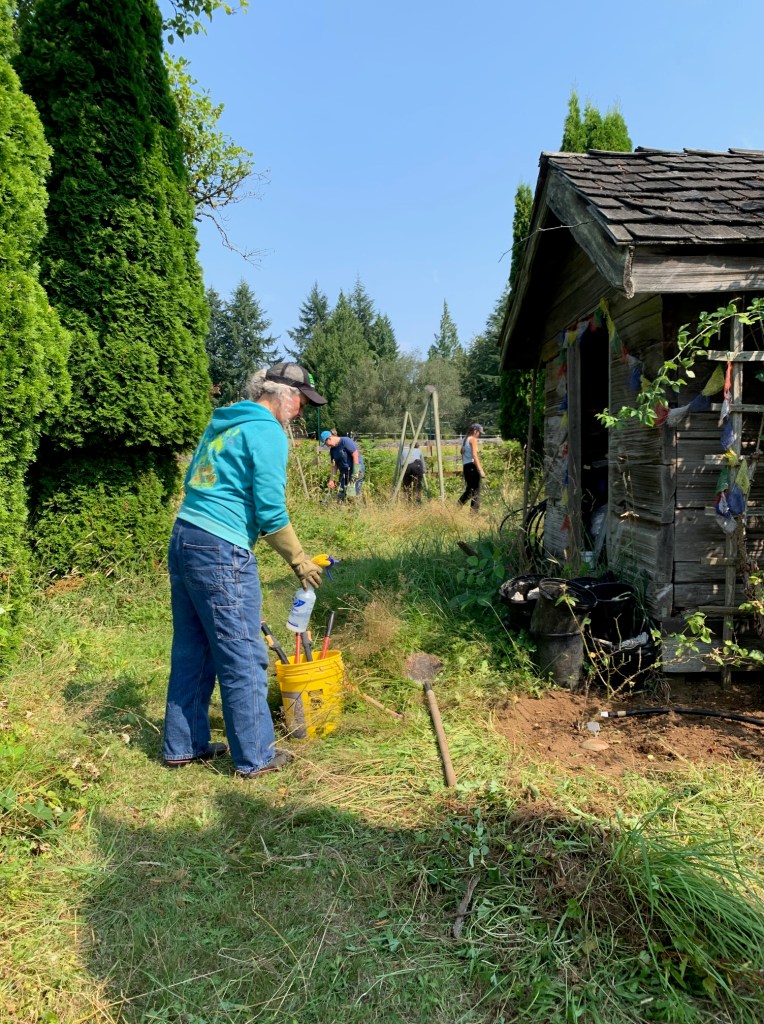

We worked all morning but had so much to show for it. After lunch, we took time to learn more about the roses and take cuttings of those that are on the endangered list. Chrissy Zavaglia and her husband, owners of Golden Root Roses in Snohomish, Washington, wanted to help with the Save the Ramblers project and found roses not in commerce yet. I heard back last week that they finished the American Rose Center paperwork and are now part of the Save the Ramblers program through the American Rose Society. Claude Graves sent me a message saying they are exactly the type of nursery we want to work with and he is so happy that they have joined the conservation effort. For more about Golden Root Roses, their URL is: https://www.goldenrootroses.com

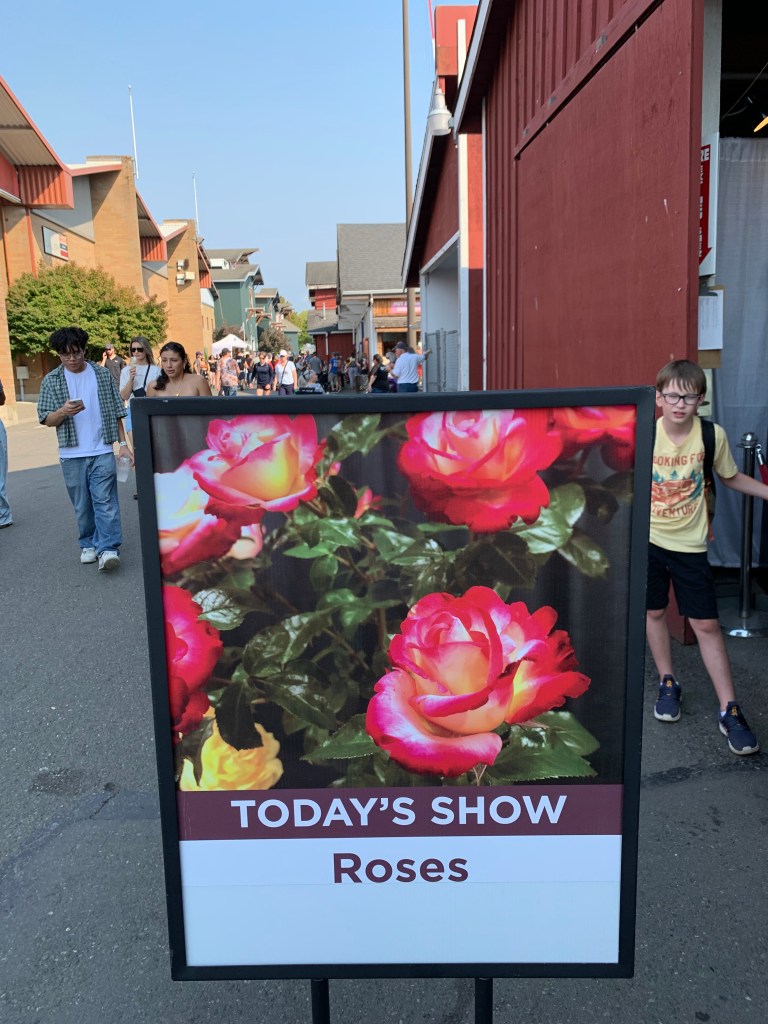
September brings the Washington State Fair. Rose societies in the area take turns tabling and answering rose questions on the three dates when roses are highlighted. I volunteered with the Seattle Rose Society and the Heritage Roses Northwest, as I am a member of both. What a delightful time! It was the only fair that I was able to go to this year and made me a little homesick for the Indiana State Fair and all of the county fairs that I used to go to. Steven and I enjoyed the “really bad for you” food and I, of course, spent time with the Jersey cows with their big brown eyes.

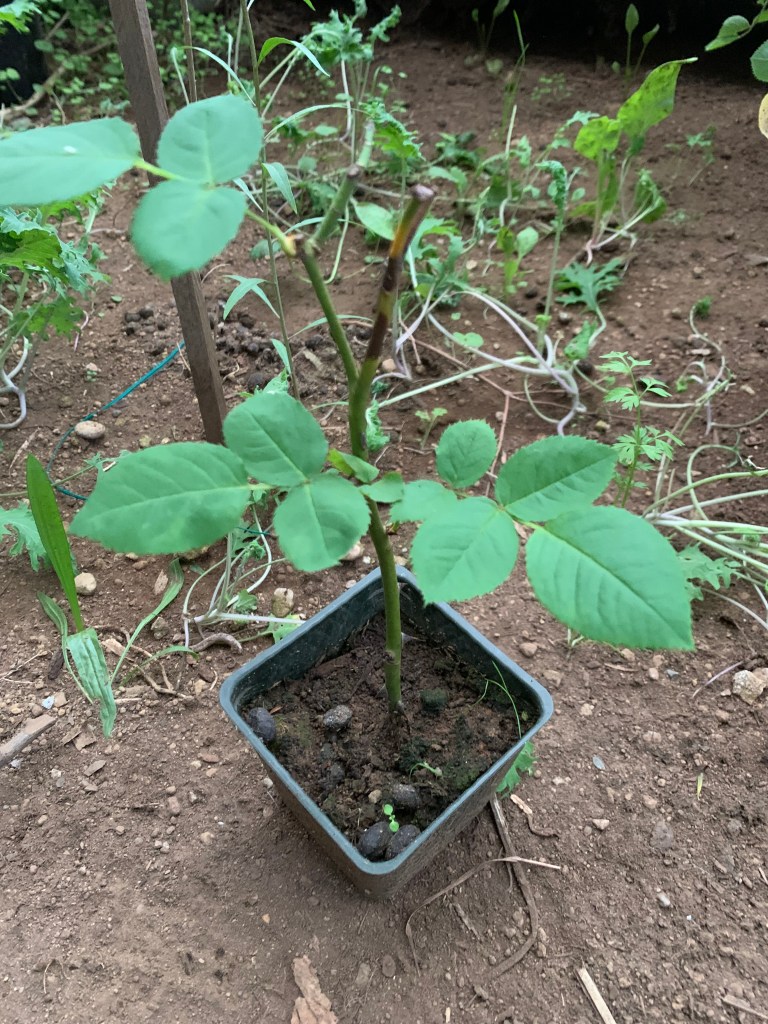
We are busy tidying up the roses as they put out their last blooms and getting the last cuttings doe this year potted up. I will send more to Claude Graves the final week in September. Here, in the Pacific Northwest, the roses still have time to grow a good root structure before colder temperatures. We still protect our young plants in the greenhouse.
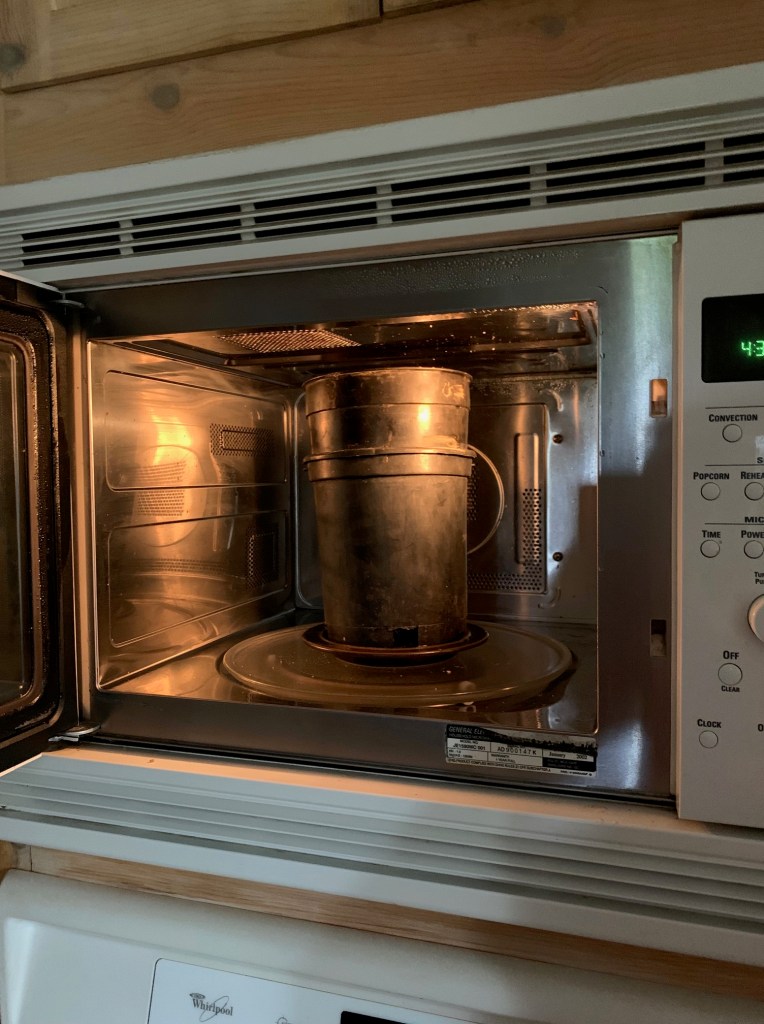
We get questions about what soil we use for our cuttings. We find commercial soil too expensive and usually problematic. We have pretty good soil here since we compost and Anne used sustainable practices. For cuttings, we take soil from the garden and microwave it for 10 minutes to pasteurize it. If you do this, be sure that your soil has moisture in it. If it is steamy when you remove it, it’s good. Keep a lid on it while it is cooling and until you are ready to mix the soil. I put perlite or vermiculite and about 1 cup of sheep manure. The amount of perlite I put in depends on what the soil feels like. The idea is to loosen up the soil so the new little roots can easily spread out. I mix this up, water well, and fill up the containers I will use. We like the deep 3″ pots. After preparing the cuttings for potting, I dip them in rooting hormone (no older than one year), poke a hole in the soil for the base of the cutting, and put the stem in so it is secure and stands upright. We then pour in a small amount of solution of bacteria that Rick grows on a rice substrate to attack possible fungal spores. There are commercial mixes of this. Rick says that any biofungicide will work and that you should use twice as much inoculum as water to get results.

We don’t use peat because it is a nonrenewable resource and there are many alternatives. I am experimenting with wool right now. I usually use pine needles.
Do you have a successful method that you use to start cuttings? I, and others, would like to hear about it. Send your methods to me at teddie.mower@gmail.com and I will include them in the blog.
A very special shout out to Kathleen, of Hollywood Berry Farm, for coming over and helping me in the garden. There is nothing better than working in the garden with a friend like Kathleen.


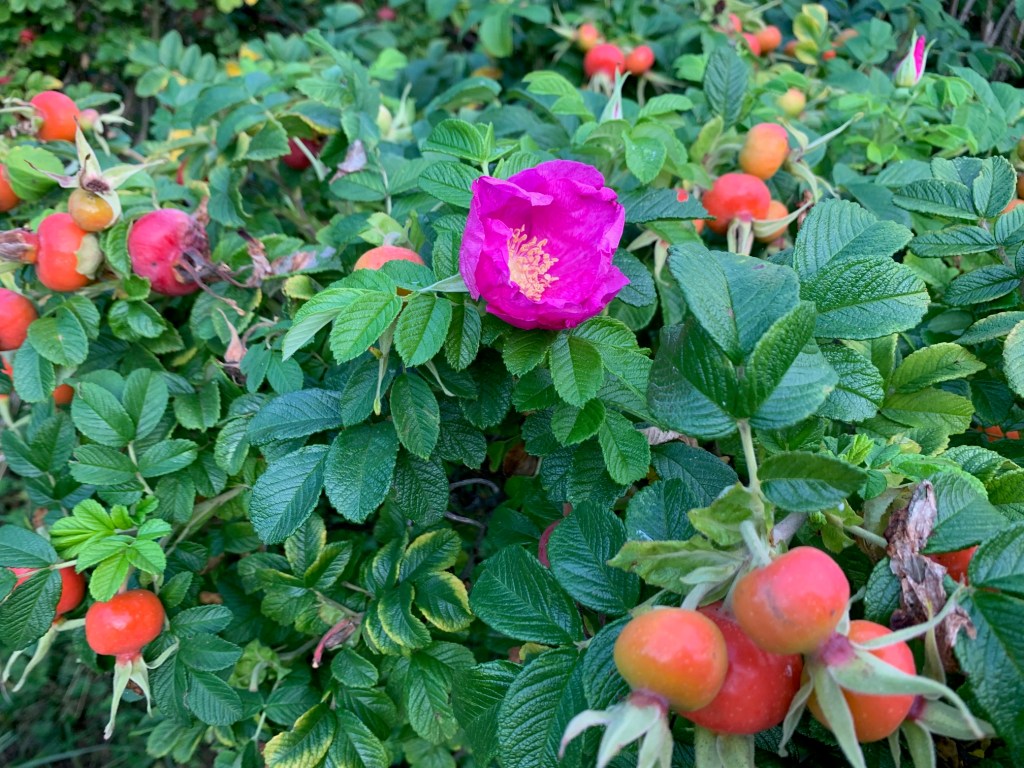
It’s 7:25 PM and just a faint light is left of the day. I leave you with a picture of a rugosa and its hips to brighten what is left of the day. To all of those at the American Rose Society annual conference in Rhode Island, I hope you had a wonderful meeting.
 Anne Belovich's Roses of Yesteryear
Beautiful. Love reading about Anne’s Garden.
LikeLiked by 1 person
Great to see so many people helping to save the old ramblers. Perhaps some of them will focus on saving the endangered American bred Walsh, Horvath and Van Fleet hybrids, which are my current fixation. In times like these when there’s so much meanness and bipartisan propaganda in the world, it’s heartening to know there are still good people out there.
LikeLiked by 1 person